
Signs Your Owasso Roof Needs Repair, and What Can Honestly Wait
Short version: granules in the gutters, a stain on a ceiling, or a shingle you can see from the driveway all mean get it looked at now, and that is what most roof repair in Owasso calls turn out to be. Slightly curled shingle edges on an otherwise sound roof usually mean keep an eye on it instead. The difference matters, because half the calls we take are urgent and half are not, and nobody should be spending money on a roof in a panic.
Here is how we sort it, and what we actually check when we come out.
The six things worth calling about
A ceiling stain, anywhere. This is the only one with no gray area. If water made it to your drywall, water has already been in your insulation and on your decking for a while. A stain is not the beginning of the problem, it is the point where the problem became visible. Call.
Granules in your gutters or at the downspout splash block. Those little sand-like grains are the shingle's sunscreen. A handful after a new roof is normal shedding. A steady accumulation means the mat underneath is exposed and the shingle is going to start cracking. This is the cheapest possible moment to deal with your roof and almost nobody calls at this stage.
Any shingle you can see is wrong from the ground. Missing, lifted, dark patch, off-color line. If you can see it from the driveway, it is not subtle up close. Wind gets under a broken seal and turns one shingle into three.
A soft or spongy spot when someone walks the roof. That is wet decking. The shingles above it may look fine. This one you will not find yourself, which is a decent argument for an inspection after a hail event even when nothing looks broken.
Daylight or wet wood in the attic. Stick your head up the hatch with a flashlight after a storm and look at the underside of the decking. Dark staining on the plywood, or actual light coming through, tells you more than the roof surface does.
Flashing that has lifted, rusted, or lost its sealant. Around the chimney, the skylights, the vents, and where a roof plane meets a wall. Flashing is the number one leak point we find, ahead of shingles.
What can usually wait
Not everything is an emergency, and we would rather tell you that than sell you a repair you do not need yet.
Minor curling at the very edges of shingles on a roof that is otherwise sealed and draining well is usually a "watch it" item. Same with a little moss on a north-facing slope, or one bent gutter section that is still moving water. A single cracked pipe boot is worth doing, but it can wait a couple of weeks if the weather is dry.
Where we push back on waiting is anything involving water that is already inside, and anything after a hail event. Owasso sits in a part of Green Country that gets hit regularly, and hail damage has a habit of looking like nothing for two years and then showing up as four leaks in one spring. If you had a hail event over your house, get it documented while the damage is fresh and attributable, whether or not you file.
If you want to do a first pass yourself before calling anyone, checking for storm damage from the ground is a reasonable place to start.
What we actually do on an inspection
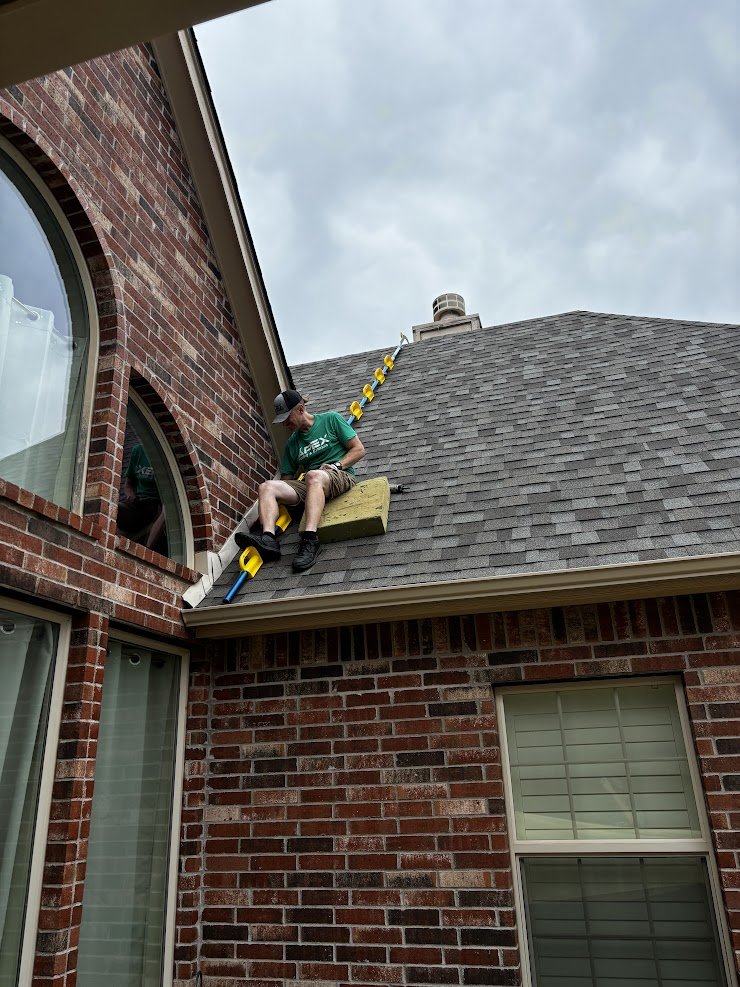
We walk the roof, not just the ground. We check every plane, the valleys, the flashing at every penetration, the ridge, and the condition of the shingle mat. We look at the gutters and the eave. When there is attic access, we look at the decking from underneath, because that is where you see what the roof has been letting through.
Then you get photos and a plain description of what we found. Most of the time what a repair involves is smaller than homeowners expect: a section of shingles, a boot, flashing pulled and reset. One visit.
When a repair stops being the right answer
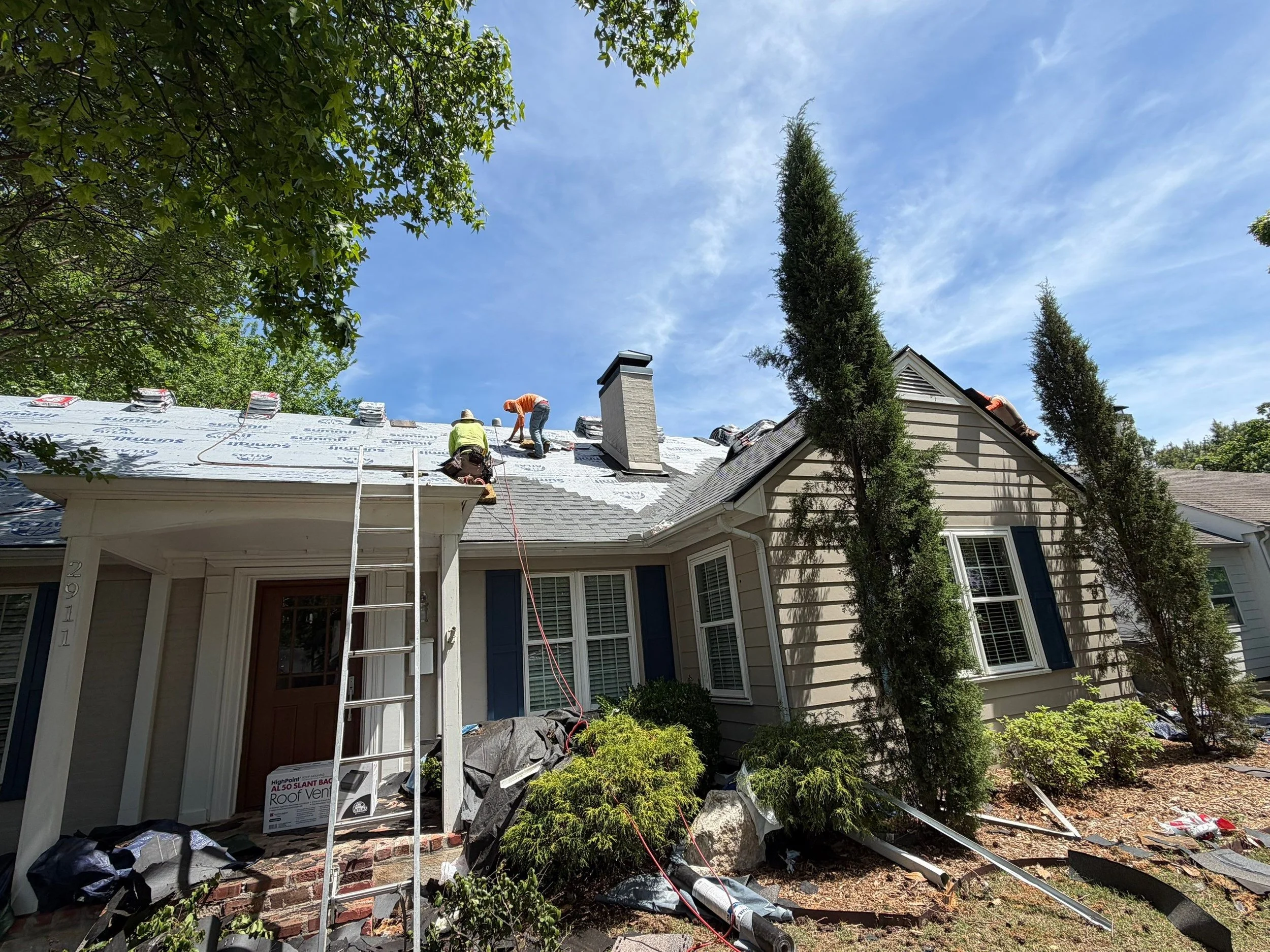
There is a point where repairing costs more over three years than doing it once. We will say so when we see it. The signals are a roof at the end of its rated life, granule loss across the whole surface rather than in one spot, multiple soft areas in the decking, or a roof that has already been patched several times in different places.
That is a real conversation, not a sales pitch, and we would rather have it honestly than patch a roof we know is finished. If it comes to that, here is what a full replacement looks like start to finish, so you know what you would be signing up for before anyone asks you to.
Get eyes on it
If you recognized two or three things on the list above, or you just have not had the roof looked at since the last big storm, book a free roof inspection. We will tell you what needs doing now, what can wait, and what does not need doing at all.
Call (918) 604-2039 or book online. We serve Owasso and the surrounding towns, we are locally owned, and every repair we do carries a lifetime workmanship guarantee.
Frequently asked questions
How do I know if my roof needs repair or replacement? The short test is whether the problem is in one place or everywhere. A leak at a chimney, a wind-lifted section, or a failed pipe boot is a repair. Granule loss across every slope, several soft spots in the decking, or a roof past its rated life points to replacement. An inspection with photos tells you which one you have.
Are granules in the gutter really a problem? A small amount right after a new roof is normal. Ongoing accumulation is not. It means the protective layer is wearing off and the shingle mat underneath is exposed to UV, which is what makes shingles brittle and crack.
Do I need an inspection if the roof looks fine after hail? Yes, and this is the one we push hardest on. Hail bruises the shingle mat without always breaking the surface. It looks fine, then fails early. Getting it documented while the storm is recent also matters if you end up filing a claim.
How often should an Owasso roof be inspected? Once a year is sensible, plus after any significant hail or high-wind event. Green Country weather is hard on roofs and an annual look catches the cheap problems while they are still cheap.
Can I just have the one bad shingle replaced? Sometimes, yes. But a shingle rarely fails alone. Wind that broke the seal on one usually broke it on the ones next to it, and we will check the surrounding area rather than swap one and call it done.
