
Roof Leaking in Your Broken Arrow Home? Do These Five Things First
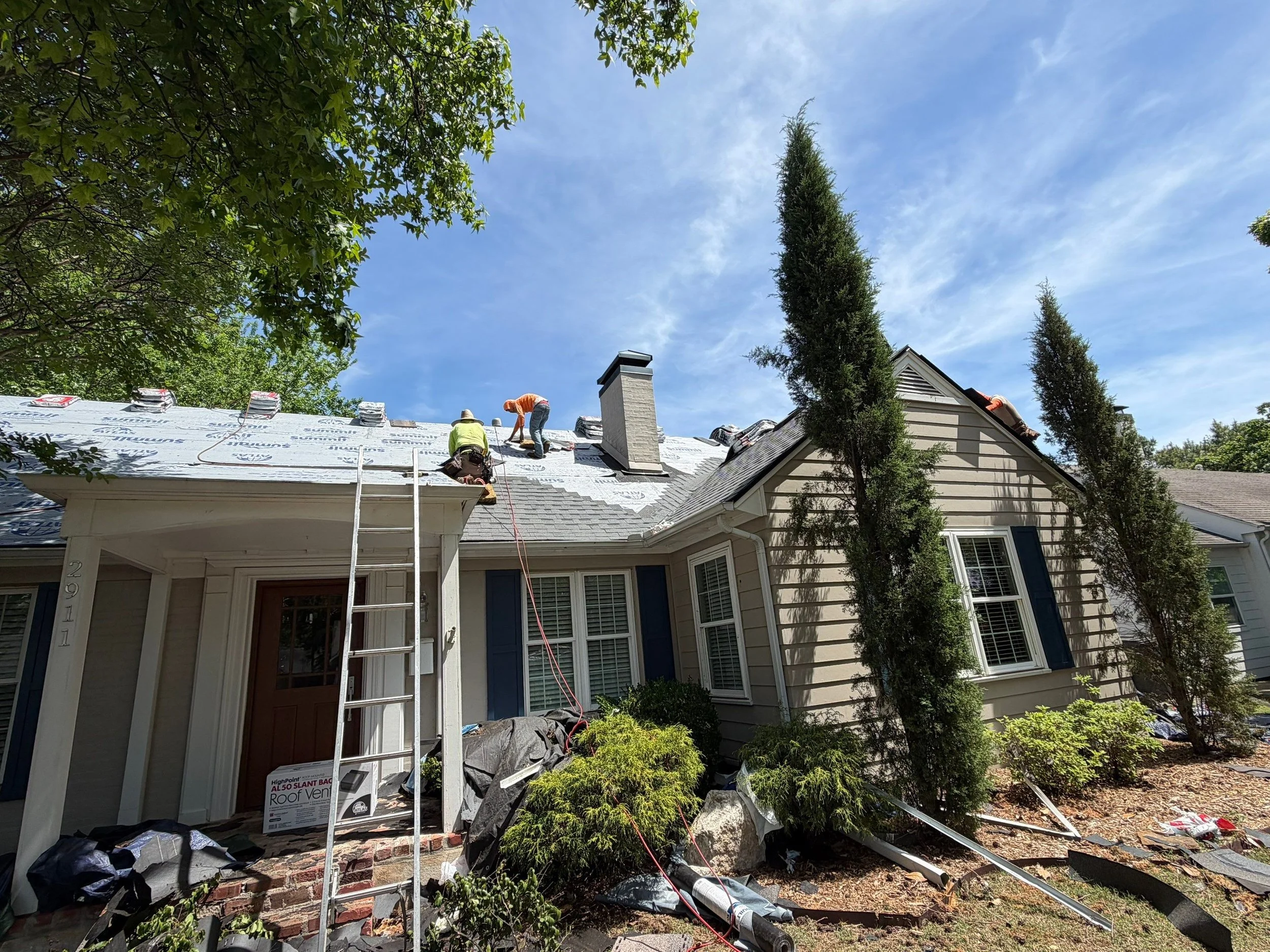
Start here: get a container under the drip, move anything that can be ruined, take pictures, and book same-day roof leak repair in Broken Arrow. Everything else can wait an hour. Water cannot.
We get these calls most weeks, usually during or right after a storm, and the homeowners who come out of it cheapest are the ones who acted the same day instead of waiting to see if it dried up on its own. It does not dry up on its own.
The five things to do right now
Move what water can ruin. Furniture, rugs, electronics, anything paper. Water finds the worst possible thing to land on.
Catch the drip. A bucket, a stock pot, a trash can. Towels around it so the splash does not soak the floor.
Drain a bulging ceiling on purpose. If you see a soft, sagging bulge holding water, poke a small hole in the low point with a screwdriver and let it run into your bucket. It feels like the wrong move. It is the right one. A controlled drip beats a section of drywall letting go all at once.
Photograph everything. The stain, the drip, the wet spot on the floor, the ceiling before you poke it. Time-stamped photos help us diagnose faster and they matter a lot if a claim comes out of this.
Call for an inspection today. Not next week. The roof is one repair. The insulation, decking, and drywall underneath it become three more if you leave them wet.
That last point is the whole reason we push hard on same-day. A leak is rarely expensive. What the leak soaks is.
Why the stain is never under the hole
Homeowners point at the ceiling and say the hole must be right up there. It almost never is.
Water gets through the roof surface, hits the deck, and then travels. It runs along the underside of the plywood, down a rafter, across a truss, and drops at the first low point it finds. That can be ten or fifteen feet from where it got in. We have chased leaks from a bedroom ceiling back up to a vent boot on the other side of the ridge.
So when we get on the roof, we do not just look at the spot above your stain. We work backward from it, checking everything uphill.
What actually lets water in on Broken Arrow roofs
A lot of Broken Arrow went up in the building boom of the late nineties and 2000s, which means a big share of the housing stock is sitting on its second roof, or on a first roof that is well past its useful life. Combine that with Green Country hail and the spring wind, and the same handful of failures come up over and over:
Flashing. The metal that seals where the roof meets a chimney, a skylight, a wall, or a valley. This is the single most common leak point we find. It rusts, it lifts, the sealant behind it dries out and cracks.
Pipe boots. The rubber collar around your plumbing vents. Rubber in Oklahoma sun has a shelf life. It splits, usually on the south-facing side first, and then every rain goes straight down the pipe.
Lifted or missing shingles. Wind gets under a shingle edge, breaks the seal strip, and after that the shingle is a flap instead of a shield. Hail cracks the mat so water works through the granule layer.
Clogged gutters and ice at the eave. When water cannot drain, it backs up under the first course of shingles. This one shows up as a stain along an exterior wall rather than in the middle of a room.
A roof that is simply finished. Sometimes there is no single villain. The roof is old, the mat is brittle everywhere, and the leak you found is the first of several.
If you want to know what to look for from the ground before we get there, you can spot storm damage yourself with a decent set of eyes and no ladder.
How we find the source, and what the fix usually looks like
Finding it is most of the work. We get on the roof, find the area above where the water shows up inside, then trace uphill through the shingles, the flashing, every penetration, and the valleys until we find the actual entry point. When we can, we go into the attic too, because wet decking tells you the story faster than shingles do.
Most of what we find is a targeted repair. A run of shingles, a new pipe boot, flashing pulled and reset properly. That is the bulk of how we handle leak repair day to day, and it is done in a visit.
If the inspection says the leak is a symptom of a roof that has given up across the whole surface, we will tell you that, with photos, and explain what we saw. We would rather lose the repair ticket than patch a roof four times and have you calling us angry in March. We back our work with a lifetime workmanship guarantee, which only means something if we were honest with you about what the work needed to be.
If it is leaking at ten at night
Contain it inside and call anyway. We take emergency leak calls and we tarp when there is no other option, because a tarp overnight is cheaper than a ceiling. Here is more on how after hours calls work.
Get it looked at before the next storm
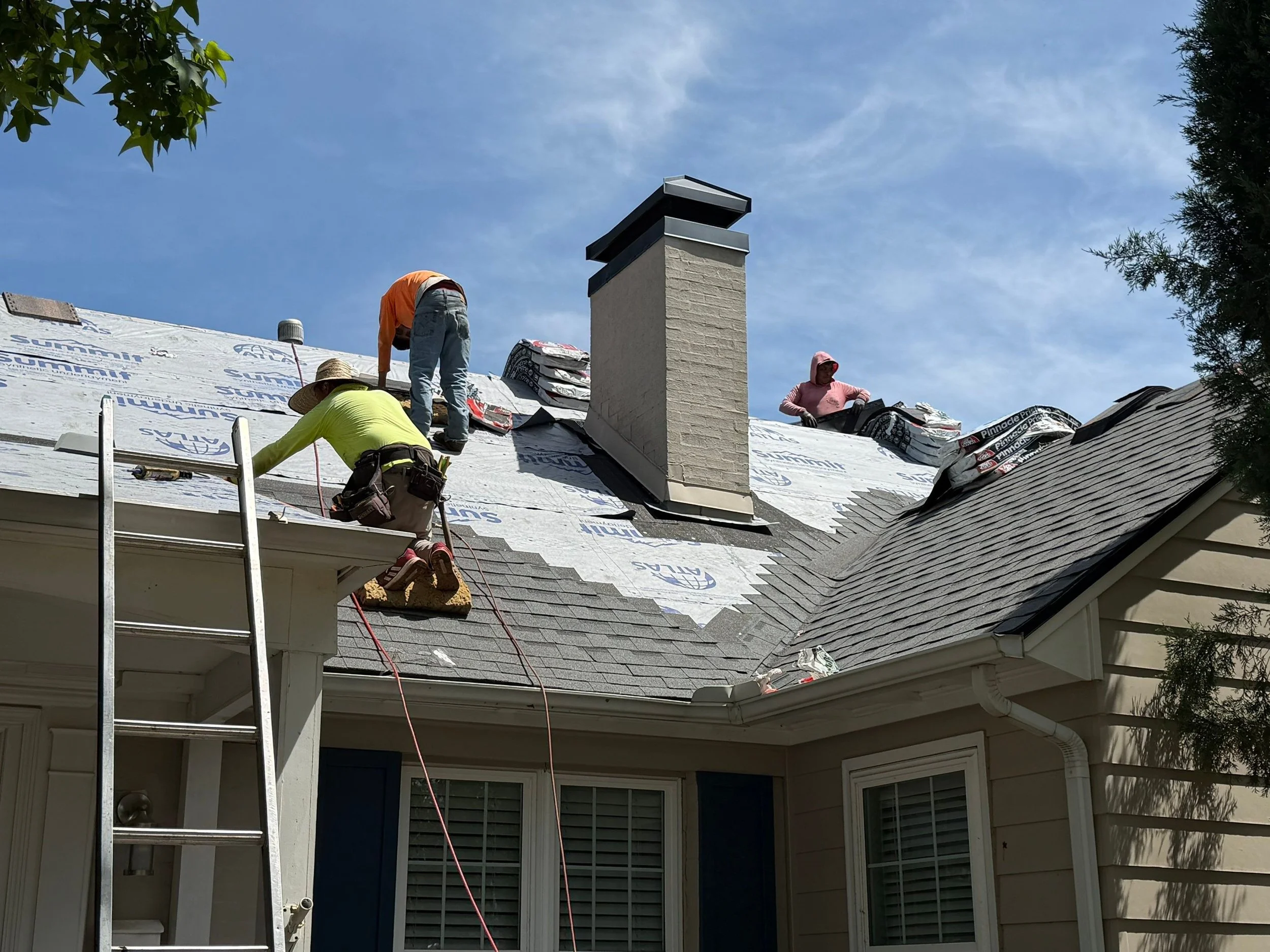
If you have an active drip, or even a stain you have been eyeing for a couple of weeks and telling yourself is old, get it inspected. Book a free roof inspection and we will find the source, document it with photos, and give you a straight answer.
Call (918) 604-2039 or book online. We work across Broken Arrow and the surrounding Green Country towns, we have more than 100 five-star Google reviews, and we were voted Platinum in roofing in the CommunityVotes Broken Arrow awards.
Frequently asked questions
My roof is leaking. What is the very first thing I should do? Get a bucket under it and move anything valuable out of the way. Then photograph the damage and call for a same-day inspection. If a section of ceiling is sagging with water in it, poke a small hole at the low point and drain it into the bucket rather than letting it collapse.
Should I go up on the roof and look myself? No. A wet roof is a genuinely dangerous place to be, and a leak that is already inside is not going to get meaningfully worse in the hours it takes us to get there. Look from the ground, or from an attic hatch if you have one, and leave the roof to us.
Why is the water showing up in a room nowhere near the damage? Water travels along the roof deck and framing before it drops. The stain forms wherever water finds its first low point, which is often well away from the entry hole. That is why we trace a leak back rather than patching above the stain.
Will insurance pay for this? It depends on the cause. Wind and hail damage often has coverage. A leak from a worn-out roof at the end of its life usually does not. We photograph everything during the inspection so you have documentation either way, and we can tell you which one it looks like before you call your carrier.
How long does a leak repair take? Most are a single visit once we have identified the source. Shingle work, a pipe boot, or resetting flashing is a few hours. If the decking underneath is rotted, that adds time because we replace the wood before anything goes back over it.
