
Roof Replacement in Broken Arrow: The Process Start to Finish, and Where Insurance Fits
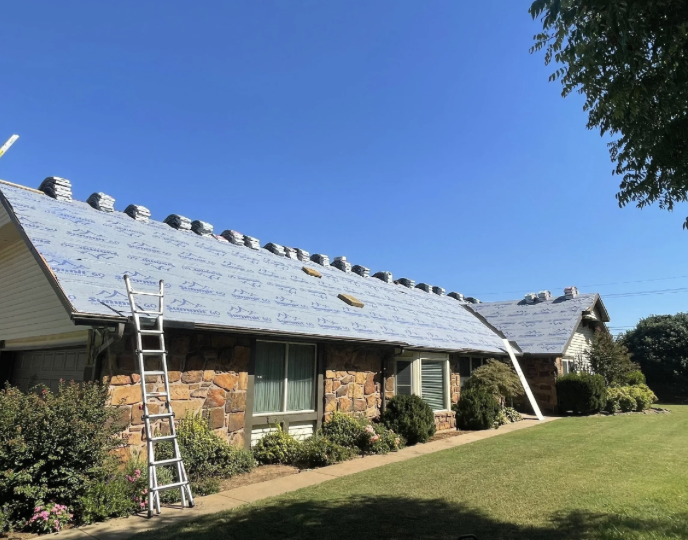
A full roof replacement on a typical Broken Arrow home is one day of actual work on the roof.
Getting to that day is what takes time, and if hail is the reason you are reading this, most of the calendar is insurance, not roofing.
Here is the honest sequence, so you know what is happening and roughly how long each part sits.
Stage one: the inspection and the decision
We come out, walk the roof, and document everything with photos. What we are looking for is whether this is genuinely a replacement or a repair wearing a replacement costume. Both answers happen. If it is a repair, we say so.
If it is a replacement, you get photos of why, and a scope of what the job includes. Half a day, and it is free.
If you are not sure you are even in replacement territory yet, the signs a roof is finished are worth reading before you call anyone.
Stage two: the insurance claim, if there is one
This is where most Broken Arrow replacements actually live, because a large share of the roofs we replace here are storm and hail jobs rather than pure age-related wear.
The order that works:
File with your carrier and get a claim number. You do this, not us. Carriers want to hear from the policyholder.
Your adjuster schedules an inspection. This can be a few days or a few weeks depending on how busy the season is. After a big regional hail event, expect the longer end.
We meet the adjuster on the roof. This is the part that matters most and the part homeowners most often skip. We are there to point at what we found and make sure it lands in the report. An adjuster covering a lot of houses in a week can miss things.
The carrier issues a scope and a first payment. Then you and we compare their scope against what the roof actually needs. If they missed something, that is a supplement, and supplements are normal, not a fight.
Two words worth knowing before your adjuster calls, because they decide how much of this you fund yourself: your policy either pays replacement cost or actual cash value. Replacement cost means the carrier eventually covers what it costs to put a new roof on, usually in two payments, the second one released after the work is done. Actual cash value means they pay the depreciated value of a roof that was however many years old, and the gap is yours. Look at your declarations page, or ask your agent point blank which one you have. It is the single biggest variable in what a hail roof costs a homeowner, and a lot of people find out at the worst possible moment.
We are not insurance adjusters and we do not negotiate your claim for you. What we do is document the damage properly and be on the roof when your adjuster is.
Stage three: materials, permit, and scheduling
Once the scope is settled, you pick the shingle and color. We order, we pull the permit, and we get you on the calendar. This stage is usually one to two weeks in normal weather and longer after a regional storm, when every roofer in Green Country is booked and suppliers are behind.
If your roof is actively leaking while you wait, tell us. We will tarp it the same day rather than let you take on water damage for two weeks over a scheduling gap.
Stage four: the day itself
What actually happens, in order:
Protection goes down first. Tarps over landscaping, plywood against the siding where debris will land, dumpster or trailer positioned.
Tear-off. The old shingles and the old underlayment come off, down to bare decking.
Decking inspection. This is the part you cannot see from a brochure and the part that separates a good job from a cheap one. With the roof stripped, we can see every soft, rotted, or delaminated sheet of plywood. Those get replaced. Shingling over bad decking is how a brand-new roof develops a soft spot in year three.
Underlayment, ice and water shield, and drip edge. The waterproofing layer, with the extra protection in the valleys and at the eaves where water backs up.
Flashing. New or properly reset at every chimney, vent, skylight, and wall intersection. Old flashing reused on a new roof is a leak with a delay on it.
Shingles, from the eave up. Then ridge cap and ventilation.
Cleanup and a magnet sweep. The magnet run across the yard and driveway matters more than it sounds like it does, especially if you have kids or tires.
Most Broken Arrow houses are done in a day. Larger or steeper roofs, or a house with a lot of penetrations and dormers, run into a second day.
Stage five: final walkthrough and the second insurance payment
We walk it with you, you get photos of the finished work and the decking that was replaced, and we file the completion paperwork. If you are on a replacement cost policy, that documentation is what releases the rest of your claim money.
Then your workmanship warranty starts. Ours is a lifetime workmanship guarantee, which is the part of a roofing warranty most people do not read closely: the manufacturer covers the shingle, the roofer covers the installation, and installation is what fails.
What drives the number
We do not put prices in blog posts, because a real number depends on your roof and quoting one here would be guessing at your house. What moves it is the square footage, the pitch, how many layers are coming off, how much decking has to be replaced, the number of penetrations and valleys, and the shingle line you choose. The decking is the one that surprises people, because nobody knows how much of it is bad until the old roof is off.
We would rather show you the roof and give you a real figure than publish a range that turns out to be wrong for you.
Book the inspection
If your roof took hail this year, or it is simply old and you are tired of wondering, start with a free roof inspection. You will get photos, a straight answer on repair versus replacement, and if there is a claim in it, we will be on the roof with your adjuster.
Call (918) 604-2039 or book online. We work here in Broken Arrow and across Green Country, we were voted Platinum in roofing in the CommunityVotes Broken Arrow awards, and we have more than 100 five-star Google reviews. If you want to see the same sequence written up for a neighboring town, here is the same process in Owasso.
Frequently asked questions
How long does a roof replacement take? The roof work itself is usually one day for a typical Broken Arrow home, two for a large, steep, or complicated roof. The full timeline from first inspection to finished roof is more often two to six weeks, and almost all of that is waiting on an insurance adjuster and materials.
Do I need to be home while the roof is replaced? No, though most people are. It is loud, so if you work from home or have a napping toddler, plan around it. You will want to be there for the final walkthrough.
What is the difference between replacement cost and actual cash value on a roof claim? Replacement cost coverage pays what it takes to install a new roof, typically in two payments with the second released after completion. Actual cash value pays the depreciated value of your old roof, and you cover the difference. Check your declarations page or ask your agent which one your policy has before you file.
Will you meet my insurance adjuster at the house? Yes, and we recommend it. We walk the roof with the adjuster and point out what we documented so it makes it into their report. Damage that does not get into the report does not get paid for.
Does my new roof need new decking? Only where the old decking is bad. We cannot know how much that is until the tear-off exposes it. Any sheet that is soft, rotted, or delaminated gets replaced, because new shingles over failed plywood will telegraph through within a couple of years.
Can you replace a roof in the winter? Yes, within limits. Shingles need reasonable temperatures to seal properly, so we watch the forecast and will move a job rather than install in conditions that compromise the seal.
